

Welcome to New Hope Physiotherapy
- Brampton 905-846-4000
- Malton 905-364-3900
- Orangeville 519-217-9300
- admin@newhopephysio.com
What is Neurological Physiotherapy?
 25 Feb 2023
- newhope
- 0 Comments
- 1890
What is Neurological Physiotherapy?
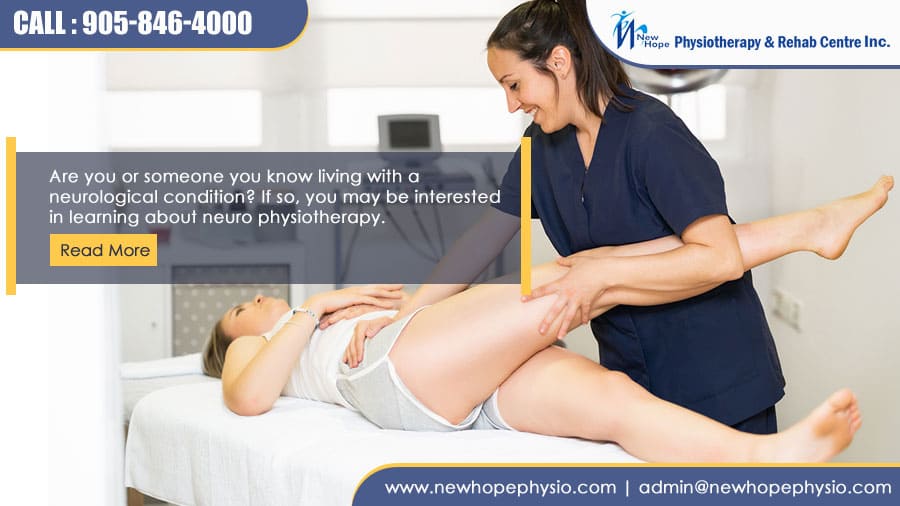
Neurological conditions can turn everyday life upside down. Walking, talking, balancing, and even holding a cup — things most people never think about — can suddenly become difficult or impossible.
Neurological physiotherapy is a specialised form of treatment designed to help people regain these abilities. It doesn’t cure conditions like stroke or Parkinson’s disease. But it can make a profound difference in how well someone functions and how much independence they maintain.
Here’s everything you need to know — explained in plain language.
Also Read : Is Acupuncture Good for Neurological Pain?
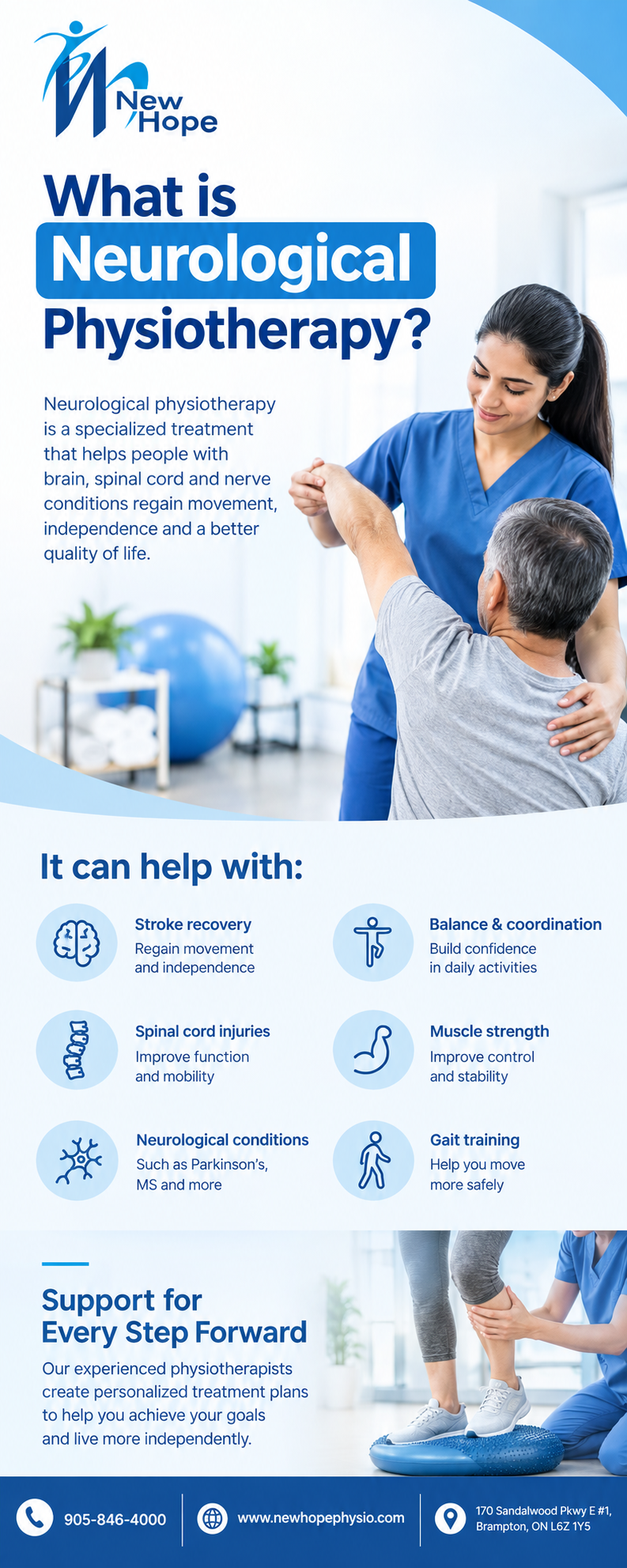
What Is Neurological Physiotherapy?
Neurological physiotherapy is a specialist branch of physiotherapy. It focuses specifically on conditions that affect the brain, spinal cord, and nervous system.
The nervous system controls everything your body does — how you move, balance, feel, and coordinate. When it’s damaged or disrupted, the effects can be wide-ranging and severe.
What It Aims to Do:
- Improve movement, balance, and coordination
- Rebuild strength in weakened or paralysed muscles
- Increase independence in daily activities
- Reduce the risk of further deterioration
- Improve overall quality of life
Neurological physiotherapy harnesses the brain’s remarkable ability to adapt and rewire itself — a process called neuroplasticity. With the right exercises and repetition, the brain can form new pathways to compensate for damaged ones.
Who Provides It?
Neurological physiotherapists are physiotherapists who have completed additional specialist training in neurology. They have a deep understanding of how the nervous system affects movement — and how to retrain it.
Also Read : 36 Questions Should I Ask A Physiotherapist?
Conditions Treated with Neurological Physiotherapy
Neurological physiotherapy can help with a wide range of conditions — from sudden events like stroke to progressive diseases like Parkinson’s.
| Condition | How It Affects the Body | How Physiotherapy Helps |
| Stroke | Sudden loss of movement, speech, or sensation on one side of the body | Retrains movement patterns, improves strength and balance, supports independent living |
| Traumatic Brain Injury (TBI) | Physical, cognitive, and emotional effects from a blow or jolt to the head | Improves balance, coordination, strength, and mobility; addresses dizziness and fatigue |
| Parkinson’s Disease | Progressive tremors, rigidity, and difficulty initiating movement | Improves gait, balance, posture, and coordination; slows physical decline |
| Multiple Sclerosis (MS) | Weakness, fatigue, balance problems, and spasticity due to nerve damage | Manages symptoms, improves function, reduces fatigue, and maintains mobility |
| Spinal Cord Injury (SCI) | Loss of movement and sensation below the level of injury | Improves strength and flexibility; prevents complications like muscle spasms |
| Cerebral Palsy (CP) | Movement and coordination problems from brain damage during development | Strengthens muscles, improves balance, mobility, and daily function |
| Guillain-Barre Syndrome | Progressive muscle weakness and paralysis due to immune attack on nerves | Rebuilds strength and function as nerves recover |
| Motor Neurone Disease (MND) | Progressive loss of muscle control | Maintains function for as long as possible; manages symptoms |
This is not an exhaustive list. Neurological physiotherapy can help with many other conditions affecting the nervous system. If you’re unsure whether it applies to your situation, ask a neurological physiotherapist for an assessment.
How Does Neurological Physiotherapy Work?
The process is structured, personalised, and progressive. Here’s a step-by-step overview of what happens from your first appointment onward.
Step 1 — Comprehensive Assessment
Your physiotherapist starts by getting a full picture of your condition and abilities.
- Medical history and diagnosis review
- Assessment of movement, strength, balance, and coordination
- Evaluation of how the condition affects your daily activities
- Discussion of your personal goals and priorities
Step 2 — Goal Setting
Together with your physiotherapist, you set clear and realistic goals. These might include:
- Being able to walk independently again
- Getting in and out of a chair safely
- Reducing the number of falls
- Returning to a specific hobby or activity
- Managing fatigue more effectively
Goals are personal. What matters most to you guides what physiotherapy focuses on.
Step 3 — Personalised Treatment Plan
Based on the assessment and goals, your physiotherapist builds a treatment plan specifically for you. This plan is reviewed and updated regularly as you progress.
Also Read: 10 Gentle Workouts to Help Lower Back Pain at Home
Step 4 — Hands-On Treatment
Your physiotherapist applies various hands-on techniques during sessions.
- Manual therapy — gentle manipulation of muscles and joints to reduce stiffness and pain
- Stretching — maintains or improves flexibility in affected muscles
- Facilitation techniques — helping the body initiate and complete movements
- Positioning and handling — teaching correct posture and movement strategies
Step 5 — Exercise Programme
Targeted exercises form the core of neurological rehabilitation.
| Exercise Type | Purpose |
| Gait retraining | Relearning how to walk safely and efficiently |
| Balance exercises | Improving stability and reducing fall risk |
| Strength training | Rebuilding muscle strength in affected areas |
| Coordination drills | Improving the brain-muscle communication pathway |
| Functional tasks | Practising real daily activities — dressing, cooking, climbing stairs |
| Fatigue management | Building endurance without triggering exhaustion |
Step 6 — Education and Support
Your physiotherapist educates both you and your family or caregivers.
- How to safely assist with movement and transfers
- How to perform daily activities without increasing injury risk
- How to manage symptoms between sessions
- What to expect as recovery progresses
- Home exercise programmes to maintain progress
Step 7 — Regular Re-Assessment
Your progress is reviewed at regular intervals. The treatment plan is adjusted based on how your body is responding. What’s challenging at the start of treatment should become easier over time — and your programme should evolve to reflect that.
Also Read : 5 Common Types of Back Pain You Should Know
Assistive Devices in Neurological Physiotherapy
Assistive devices play an important role in neurological rehabilitation. They help people move more safely, maintain independence, and prevent falls.
| Device | What It Helps With |
| Walking frames / Zimmer frames | Stability for those with significant weakness or balance problems |
| Walking sticks / canes | Support and balance for moderate gait difficulties |
| Ankle-foot orthoses (AFOs) | Supporting the foot and ankle in conditions like foot drop |
| Wheelchairs | Mobility for those unable to walk safely or at all |
| Transfer boards | Helping people move between surfaces safely |
| Functional electrical stimulation (FES) | Stimulating nerves to activate weakened muscles during movement |
Your physiotherapist will recommend devices based on your specific needs and will teach you — and your caregivers — how to use them safely and effectively.
Also Read: 5 Quick Home Remedies for Leg Cramp Relief and Prevention
The Benefits of Neurological Physiotherapy
The impact of neurological physiotherapy goes far beyond physical improvement. Here’s what consistent, well-managed treatment can achieve.
| Benefit | What It Looks Like in Real Life |
| Improved mobility | Walking further, more steadily, and with less assistance |
| Better balance | Fewer falls and greater confidence in movement |
| Increased independence | Performing daily tasks without needing constant help |
| Reduced pain and spasticity | Less muscle tightness, cramping, and discomfort |
| Improved strength | Easier to stand, transfer, and carry out physical tasks |
| Better speech and communication | Particularly important after stroke or TBI |
| Slower disease progression | Especially relevant for progressive conditions like MS and Parkinson’s |
| Better mental health | Reduced anxiety and depression that often accompany neurological conditions |
| Improved quality of life | Greater participation in activities, social connection, and fulfilment |
The brain’s ability to adapt never completely stops — which means improvement through neurological physiotherapy is possible at any stage, even long after the initial injury or diagnosis.
The Future of Neurological Physiotherapy
This is one of the most exciting areas of physiotherapy right now. Technology is transforming what’s possible for people with neurological conditions.
Also Read: Frozen Shoulder vs. Rotator Cuff Tear: Key Differences and Symptoms
Emerging Technologies Making a Difference:
| Technology | How It Helps |
| Virtual Reality (VR) | Immerses patients in safe, engaging environments to practise movement and coordination |
| Wearable sensors | Track real-time movement data so physiotherapists can monitor progress remotely |
| Functional electrical stimulation (FES) | Activates paralysed or weakened muscles using electrical impulses |
| Robotic-assisted therapy | Provides repetitive, precise movement to retrain motor pathways |
| Augmented reality games | Make exercises more engaging by turning them into interactive experiences |
| Tele-rehabilitation | Allows patients to receive treatment from home via video call |
| AI-powered analytics | Helps physiotherapists personalise treatment plans using patient data |
These innovations are making neurological physiotherapy more accessible, more engaging, and more effective — particularly for people in rural or remote areas who struggle to attend regular in-person sessions.
Tips for Getting the Most Out of Neurological Physiotherapy
- Be consistent — attend sessions regularly and don’t skip without good reason
- Do your home exercises daily — progress between sessions depends on it
- Communicate honestly — tell your physiotherapist what’s working and what isn’t
- Be patient — neurological recovery is often slow but meaningful over time
- Involve your family — carers who understand the programme can support recovery at home
- Celebrate small wins — every improvement, however small, is meaningful progress
- Ask questions — understanding your condition helps you manage it better
Recovery from neurological conditions is rarely linear. There will be good weeks and harder ones. A good neurological physiotherapist will help you navigate both — and keep your progress moving in the right direction overall.
Also Read :Shoulder Pain Solutions: 7 Essential Exercises for Quick Relief
5 Frequently Asked Questions About Neurological Physiotherapy
1. How soon after a stroke or brain injury should I start neurological physiotherapy?
As soon as it is medically safe to do so — which in many cases is within the first few days after a stroke or injury. Early physiotherapy is associated with significantly better outcomes. The brain is most receptive to rewiring in the weeks immediately following a neurological event, so starting early is crucial. Your medical team will coordinate the timing with your physiotherapist.
2. Can neurological physiotherapy help if I’ve had my condition for years?
Yes. While early intervention tends to produce faster results, the brain retains some degree of plasticity throughout life. People who have had a stroke or brain injury years ago can still make meaningful functional gains through neurological physiotherapy. For progressive conditions like MS or Parkinson’s, physiotherapy helps maintain function and slow decline — even in the later stages of the disease. It’s never too late to benefit.
3. How often will I need to attend sessions?
This varies based on your condition and your stage of recovery. In the early stages of recovery after a stroke or brain injury, daily physiotherapy may be recommended if you’re in a hospital or rehabilitation setting. Once you’re in community-based care, sessions are typically 1 to 3 times per week. For people with stable long-term conditions, monthly maintenance sessions may be sufficient. Your physiotherapist will advise based on your specific situation.
4. Will I need neurological physiotherapy forever?
Not necessarily. Some people complete a course of neurological physiotherapy, achieve their rehabilitation goals, and are able to maintain their function independently with a home exercise programme. Others with progressive or complex conditions benefit from ongoing, long-term support. The aim is always to build as much independence as possible — so that over time, you need less clinic-based support and more self-management.
5. My family member has a neurological condition but struggles to leave the house. Can they still access physiotherapy?
Yes. Many neurological physiotherapists offer home visits, and tele-rehabilitation via video call is increasingly available and effective for many types of neurological conditions. Some exercises and much of the education component of neurological physiotherapy can be delivered remotely. Speak to a physiotherapy clinic about what options are available — access should never be a barrier to getting the help someone needs.
Also Read: What Should You Not Do After Cupping?
6. What is neurological physiotherapy?
Neurological physiotherapy is a type of treatment that helps people with problems affecting the brain, spinal cord, or nerves. It improves movement, balance, strength, and daily activities.
7. Who can benefit from neurological physiotherapy?
People with conditions such as stroke, Parkinson’s disease, multiple sclerosis (MS), spinal cord injuries, brain injuries, or nerve damage can benefit from neurological physiotherapy.
8. What happens during a neurological physiotherapy session?
A physiotherapist will assess your condition and create a treatment plan. Sessions may include balance training, walking practice, strength exercises, stretching, coordination exercises, and functional movement training.
9. How long does neurological physiotherapy take?
The length of treatment depends on your condition and recovery goals. Some people improve in a few weeks, while others may need ongoing therapy for several months.
10. Can neurological physiotherapy improve quality of life?
Yes. Neurological physiotherapy can help reduce pain and stiffness, improve mobility and balance, increase independence, lower the risk of falls, and make everyday activities easier.
Also Read : Dry Cupping vs Wet Cupping: Key Differences & Treatments
Conclusion
In conclusion, Neurological Physiotherapy can significantly improve the quality of life for individuals living with neurological conditions. If you or someone you know is struggling with a neurological condition. Consider seeking out the services of a neuro physiotherapist. They can help you achieve your goals and support you on your road to recovery.
Experience top-notch neurological physiotherapy treatment at New Hope Physiotherapy inc. Book an appointment today with our highly trained therapists. Take the first step towards recovery from strokes, spinal cord injuries, Parkinson’s disease, and more.
Gauravdeep Randhawa, Registered Physiotherapist
Gauravdeep Randhawa is a caring and experienced physiotherapist with over 17 years of experience helping patients recover and improve their quality of life.
She started her own practice in Canada in 2009 and has treated many patients with muscle, joint, sports, neurological, and pelvic health conditions. She has also owned and operated multidisciplinary clinics.
Gauravdeep is a Certified Manual Therapist and has completed training in Contemporary Medical Acupuncture and Pelvic Floor Therapy. She uses hands-on treatment, personalized exercise programs, and evidence-based care to support each patient’s recovery.
Her goal is to help people reduce pain, restore movement, improve function, and achieve long-term wellness in a comfortable and supportive environment.
Medical Disclaimer:
This information is for general education only and is not a substitute for professional medical advice. Neurological physiotherapy should be tailored to each person’s condition. Consult a qualified healthcare professional for proper assessment and treatment.
Also Read: Top 5 Exercises for Strengthening Your Pelvic Floor

Leave a Comment